SIM at London Climate Action Week 2026

We are looking forward to participating in a number of events during London Climate Action Week. The team will be attending in person, so if you are there too and would like to connect, please reach out via admin@sim.finance

What we will be doing:

  • Participating in discussions and exploring collaboration opportunities around accelerating investments in forest protection, and the circular economy
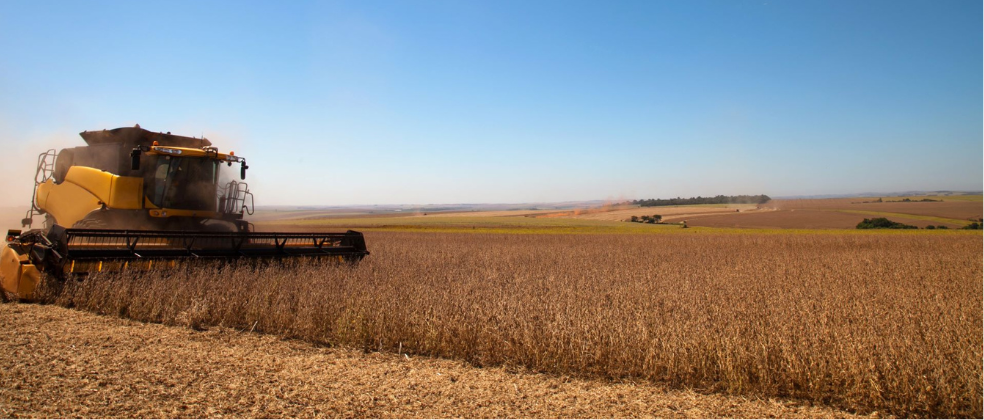
  • Showcasing the Responsible Commodities Facility (RCF) as a proven and scalable solution to support deforestation and conversion-free production of soy in Brazil 
  • Previewing RCF Trace – Accounting for Low Carbon Soy in Global Supply Chains project, which will demonstrate a scalable, credible model for accounting for deforestation-free (DCF) and low-carbon soy from Brazil to European markets.
  • Discussing the role innovative technology such as our Kolekt app, EPR compliance certificates and global waste simulator can play in waste management systems and improving recycling rates worldwide
  • Speaking to companies looking to meet voluntary CSER targets or Extended Producer Responsibility (EPR) legislation for their waste footprints through the Circular Action Hub – the world’s largest directory of social impact driven waste initiatives
  • Promoting collaboration opportunities for events at Rio Climate Action Week in August.

Many of the events we are attending are by invite only, but we will also have a presence at the following public events:

Monday 22nd

Tuesday 23rd

Wednesday 24th

Thursday 25th

Share the Post:

Related Posts

Eligibility Criteria for Cerrado Programme 1

The following eligibility criteria are required for participation in the Responsible Commodities Facility for Cerrado Programme 1 (see full description here):

Land use

The area of cultivation must not have had any deforestation and conversion of native vegetation since 1 Jan 2020*. Preference will be given to areas converted from abandoned pasture land to soy cultivation after 2008.

Forest Code Compliance

Farm land must be registered with the Cadastro Ambiental Rural (CAR). The farm must contain and maintain areas of native vegetation equivalent to those required for Legal Reserve and Areas of Permanent Protection (APPs) determined by the Forest code or have formally adhered to a Programme of Environmental Regularization (PRA) established by the state environmental agency**. The farm area must not overlap with public protected areas, indigenous lands and other traditional people and community lands (including ‘quilombolas territories’).

Land title

Farmers must have unquestionable rights to use the land, be it as a land title or land lease agreement.

Legal Compliance

Farmers must demonstrate that they and their farms do not contravene any environmental or legal requirements, such as embargoes, environmental irregularities, contraventions of the labour legislation (including slave and child labour), and internationally-accepted rules for the use of agrochemicals.

*Farmers occasionally request the conversion of small areas of native vegetation to conduct farm improvements (building storage areas, water reservoirs, etc.). Provided that these areas are small and not for the purpose of expansion of the agricultural area, RCF analyses and considers them eligible. In order to do so, RCF uses the concept of Minimal Level (of deforestation or conversion) as defined by the Accountability Framework Initiative Terms and Definitions, which states “To be considered consistent with no-deforestation or no-conversion commitments, minimal levels must generally meet the following conditions: Not exceed cumulative thresholds that are small both in absolute terms (e.g., no more than a few hectares) and relative to the area in question (e.g., no more than a small proportion of the site).”

**The RCF analyses Forest Code compliance by looking at single farms (defined as the area covered by a CAR) or bundles of individual CARs that, in combination, result in the desired area of native vegetation put under the protective status of the RCF.  This bundling should not be understood as a means of compliance with the Forest Code requirements and is not intended to release the farmer of the regularization process committed under the Forest Code rules (enrolment in the CAR, engagement in a PRA, etc.). In order to differentiate its metrics from those of the Forest Code, the RCF refers to areas of Excess Native Vegetation (ENV) as opposed to Excess Legal Reserve, to avoid confusion with areas legally categorised under the Forest Code.